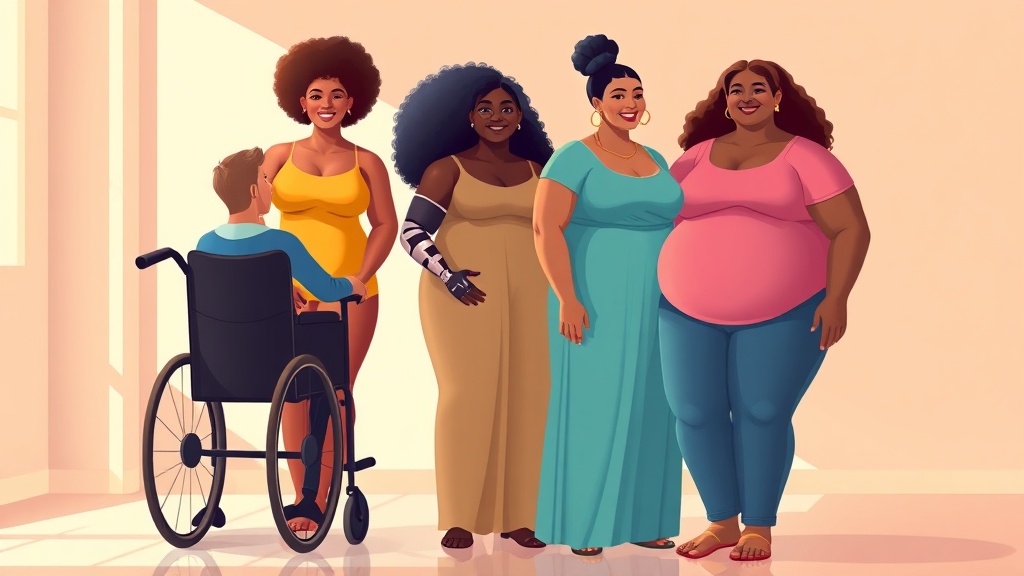
Disability & Body Positivity: Inclusive Practices for Acceptance
Ever felt like the body positivity movement forgets about bodies that move differently or need extra support? You’re not alone. I’ve spent years in therapy watching the conversation swing between celebrating curves and overlooking the lived reality of disability.
In this post, I’ll unpack what disability inclusion really looks like in body positivity, share practical steps you can start today, and point you toward research that backs up why these practices matter.
What does disability inclusion look like in body positivity?
When we talk about "body positivity," the default image is often a plus‑size model on a runway. But disability brings a whole spectrum of bodies that are frequently invisible: wheelchair users, people with prosthetics, chronic pain sufferers, and those whose bodies change day‑to‑day. Inclusion means intentionally featuring these bodies, using language that respects lived experiences, and challenging ableist assumptions that equate value with "functionality."
Research confirms the gap. A content analysis of Instagram posts from the disability community found that only 12% of #BodyPositivity tags featured disabled bodies, and many of those posts were framed as "inspirational" rather than everyday representation. ScienceDirect, 2024
Why does inclusive body positivity matter for mental health?
Excluding disabled bodies reinforces a hierarchy: "able-bodied = normal, disabled = other." That hierarchy fuels internalized ableism, which research links to higher rates of anxiety and depression among disabled people National Eating Disorders Association, 2023. When we broaden the narrative, we give more people a mirror to see themselves—and that simple act can shift self‑esteem dramatically.
How can I practice inclusive body positivity in my daily life?
Here are three concrete habits you can start right now. They build on the five simple practices I already shared, but with a disability‑focused lens.
1. Curate your feed with diverse representation
Follow creators who openly discuss disability and body image. For example, Annie Segarra’s work on ableism and body positivity is a powerful reminder that "the movement often excludes people with disabilities, chronic illnesses, and those with fluid relationships with their bodies" (Dove, 2024). When you scroll, ask yourself: Do I see bodies that look like mine? If not, hit unfollow and replace with accounts that do—just like I did when I unfollowed 47 accounts to stop the self‑critique loop.
2. Use language that honors ability variance
Swap phrases like "overcoming limitations" for "adapting with strengths." When you talk about your own body, acknowledge the ways it works differently. For instance, instead of "I can’t do X because I’m lazy," try "My body moves in a way that requires different strategies, and that’s okay." This subtle shift reduces internalized ableism and aligns with the therapeutic approach I used in my clinical years.
3. Advocate for accessible spaces and healthcare
Remember the doctor‑advocacy guide I wrote? The same principles apply: bring a list of accommodations, ask direct questions, and document everything. When you speak up, you’re not only protecting your health—you’re modeling self‑advocacy for other disabled bodies in the community.
What resources can help me deepen my understanding?
Beyond the daily habits, I recommend diving into these research‑backed reads:
- "Locating disability within online body positivity discourses" (Taylor & Francis, 2022) – explores the #DisabledAndCute hashtag and how disabled women negotiate love‑your‑body narratives.
- National Eating Disorders Association: Disability and Body Positivity – offers clinical insights on how ableism intersects with eating‑disorder risk.
How do I keep this practice sustainable?
Just like any mental‑health habit, consistency beats intensity. Pair these inclusion practices with the 7‑day body positivity challenge I designed earlier this year. On days you feel discouraged, revisit the challenge’s mindfulness exercises and remind yourself that "real acceptance" includes every version of you—including the one that uses a wheelchair or a prosthetic.
Takeaway
Inclusive body positivity isn’t a buzzword; it’s a necessary evolution of a movement that should serve all bodies. By curating your feed, choosing respectful language, and advocating for accessibility, you’ll create a more honest, messy, and ultimately liberating space for yourself and others.
Frequently Asked Questions
- What is the first step to make my social media more inclusive? Follow at least three creators who discuss disability and body image, and replace accounts that reinforce narrow standards.
- How can I talk about my disability without feeling self‑conscious? Frame it as a part of your lived experience, not a tragedy. Use phrases like "my body moves differently" rather than "my body is broken."
- Are there specific exercises for body‑positive movement when I have limited mobility? Yes—look for chair‑based yoga or adaptive dance videos. The key is to focus on what feels good, not on matching a able‑bodied routine.
Ready to start? Pick one of the habits above, try it for a week, and notice how your relationship with your body shifts. You deserve a body‑positive space that sees you—exactly as you are.