Every Woman's Body Is a Story Worth Celebrating
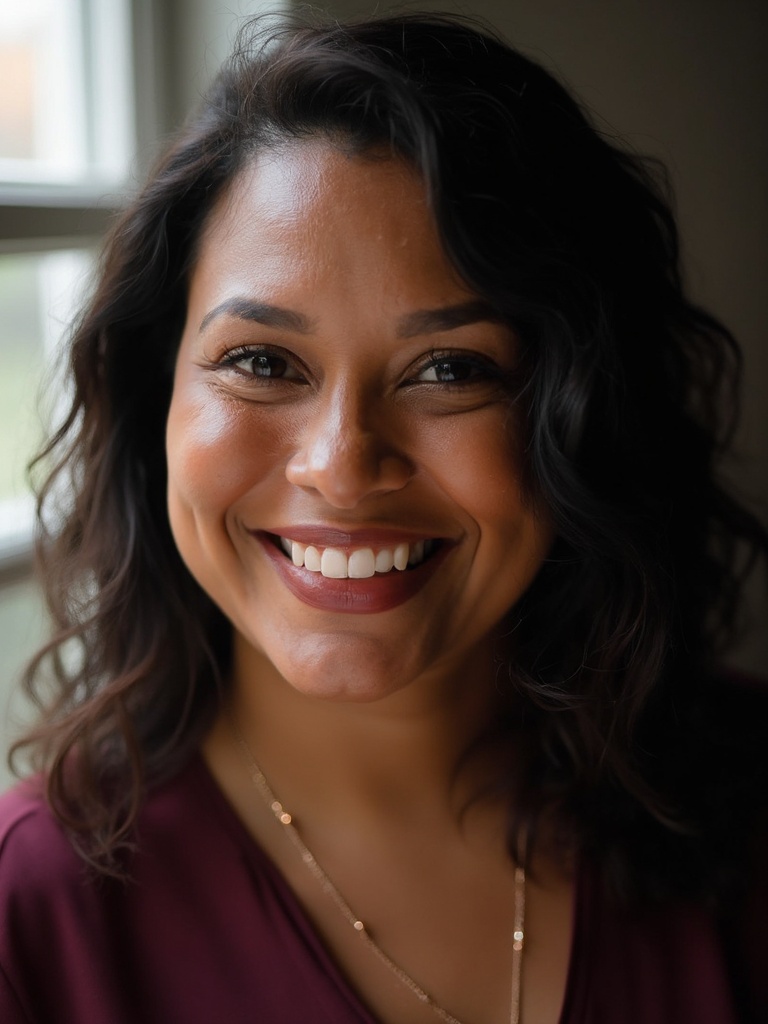
Every Woman's Body Is a Story Worth Celebrating
You know that feeling when you're scrolling through Instagram on International Women's Day and every post is about "empowerment" but the photos all look the same? Same body type. Same angles. Same narrow definition of what a "celebrated" woman looks like?
Yeah. Let's talk about that.
What We're Actually Celebrating (And What We're Not)
International Women's Day started as a labor movement. It was about women's rights, suffrage, fair working conditions. It was never supposed to be about whose body fits the beauty standard.
But somewhere along the way, "celebrating women" became visual. And visuals, in our culture, come with conditions. We celebrate the women who look the part. The ones whose bodies don't challenge anyone's comfort. The ones who fit.
Here's what I want to say loud and clear on this day: Every woman's body is worthy of celebration. Not because it looks a certain way. Not because it's "healthy" by someone else's definition. Not because it's aesthetically pleasing to the male gaze or the Instagram algorithm.
Worthy because it exists. Because she exists in it. Because she's living her one life in that body, and that is enough.
The Diversity We Rarely See
Let's be honest about what real diversity in women's bodies actually looks like:
Size diversity: Women exist in bodies from size 00 to size 40 and beyond. The "average" American woman is a size 16-18. Yet representation still centers sizes 0-8. When we say "all bodies," we need to mean the bodies that get medically discriminated against, the bodies that can't find clothes in most stores, the bodies that people feel entitled to comment on.
Age diversity: Women over 50 exist. Women over 70 exist. Their bodies have changed, softened, carried them through decades. They deserve to be seen, not erased or made invisible.
Ability diversity: Disabled women. Women with chronic illness. Women whose bodies move differently or don't move in expected ways. Women with prosthetics, with mobility aids, with bodies that function on their own terms. Their bodies are not broken versions of "normal" — they are their own complete, valid existence.
Racial diversity: Black women's bodies have been policed and sexualized since this country's founding. Asian women's bodies are fetishized or desexualized depending on the moment. Indigenous women's bodies carry intergenerational trauma. Latina bodies are stereotyped and caricatured. Centering white women's body experiences as "universal" is not celebrating all women.
Trans and nonbinary diversity: Trans women are women. Nonbinary people navigating a binary world deserve body acceptance too. The body acceptance conversation that only includes cis women is incomplete.
Postpartum bodies: Bodies that have grown and birthed humans. Bodies with stretch marks and scar tissue and changes that never "bounce back." Worthy of celebration, not pressure to return to some pre-baby state.
Menopausal bodies: Bodies shifting, changing, releasing the cycle they've carried for decades. Bodies entering a new chapter that our culture has taught us to fear.
Bodies with scars, with marks, with differences: Every story written on skin. Every history visible. Every body that doesn't fit the template of what a "woman's body" is "supposed" to look like.
Why This Matters Beyond Representation
Here's the thing about representation: it's not just about seeing yourself in media. It's about whether you believe you deserve to take up space.
When the only bodies celebrated on International Women's Day are a narrow slice of the reality, the message sinks in: Your body is not the kind we're talking about. Your celebration is conditional. Your worth is up for debate.
That message keeps women small. Literally and figuratively. It keeps us apologizing for our bodies, hiding our bodies, trying to change our bodies before we'll let ourselves be seen.
And it's not an accident. Diet culture is a $70+ billion industry. The beauty industry is $500+ billion. These systems profit when women believe our bodies are problems to be solved. When we only see one type of body celebrated, it reinforces the lie that everyone else needs to buy the solution.
What Real Celebration Looks Like
I want to propose something different for this International Women's Day. Not just posting a body-positive quote and moving on. Not just saying "all bodies are beautiful" while your feed looks the same.
Real celebration looks like:
Curating your feed aggressively: Unfollow accounts that only show one body type. Follow fat creators. Follow disabled creators. Follow older women. Follow trans women. Flood your visual field with the reality of body diversity until narrow beauty standards start to look strange, not normal.
Spending money that reflects your values: Shop at brands that carry extended sizes — not just "plus" as an afterthought, but sizes that go to 6X and beyond. Support businesses that show diverse bodies in their marketing without tokenizing. Your dollars are votes.
Changing your language: Stop complimenting people on weight loss (you don't know if it was intentional, healthy, or wanted). Stop using "fat" as an insult. Stop calling people "brave" for wearing clothes while fat. Stop commenting on bodies, period, unless invited.
Setting boundaries with body talk: When your mom comments on your weight at family dinner. When your coworker starts a diet conversation in the break room. When your friend asks if she looks fat in something. Practice saying: "I'm working on not commenting on bodies, including my own. Let's talk about something else."
Extending compassion to yourself: You can't truly celebrate other women's bodies while hating your own. The work is internal too. Notice when you're judging another woman's appearance — it's usually because you're afraid of being judged yourself. That's the internalized fatphobia talking.
A Note on Intersectionality
I want to be really clear here: as a size 18 Black woman, my experience of body acceptance is different from a size 18 white woman's experience. My experience is different from a size 26 woman's experience. Different from a disabled woman's experience. Different from a trans woman's experience.
Body acceptance that only centers one type of experience isn't real body acceptance. It's just expanding the circle of who's "acceptable" slightly wider, while still leaving people out.
The body positivity movement has been criticized for being co-opted by smaller-bodied, white, cisgender women. That's a fair critique. And it's on all of us — especially those of us with more privilege in the body we inhabit — to make sure we're not centering ourselves in conversations that aren't about us.
Listen to fat people about fat liberation. Listen to disabled people about disability justice. Listen to trans people about their bodies and experiences. Don't speak over them. Don't "well, actually" them. Just listen. Learn. And use whatever platform you have to amplify voices that don't get the microphone as often.
The Work Is Ongoing
International Women's Day is one day. Body acceptance is a lifetime practice.
You're not going to fix your internalized fatphobia today. You're not going to perfectly celebrate every body type by reading one post. The world isn't going to transform overnight.
But you can start. You can notice. You can make one choice today that's kinder to yourself or someone else. You can expand your definition of what a "celebrated" body looks like, one follow, one purchase, one conversation at a time.
You can recognize that when we say "every body is a good body," we mean it. Not as a slogan. As a practice. As a commitment to challenging the systems that tell us otherwise.
Closing Thought
To every woman reading this: Your body is worthy of celebration exactly as it is today. Not when you lose weight. Not when you tone up. Not when you fit into something smaller. Not when you look more like the women in the magazines.
Today. Now. In the body you're living in.
Your body has carried you through every hard day, every joy, every ordinary moment. It doesn't need to be different to deserve respect. It doesn't need to be beautiful by someone else's standard to be worthy.
Happy International Women's Day. Let's celebrate us — all of us — exactly as we are.
If you're struggling with body image, disordered eating, or mental health challenges, please reach out for professional support. You don't have to do this work alone.
NEDA Helpline: 1-800-931-2237
Crisis Text Line: Text HOME to 741741
988 Suicide & Crisis Lifeline: Call or text 988