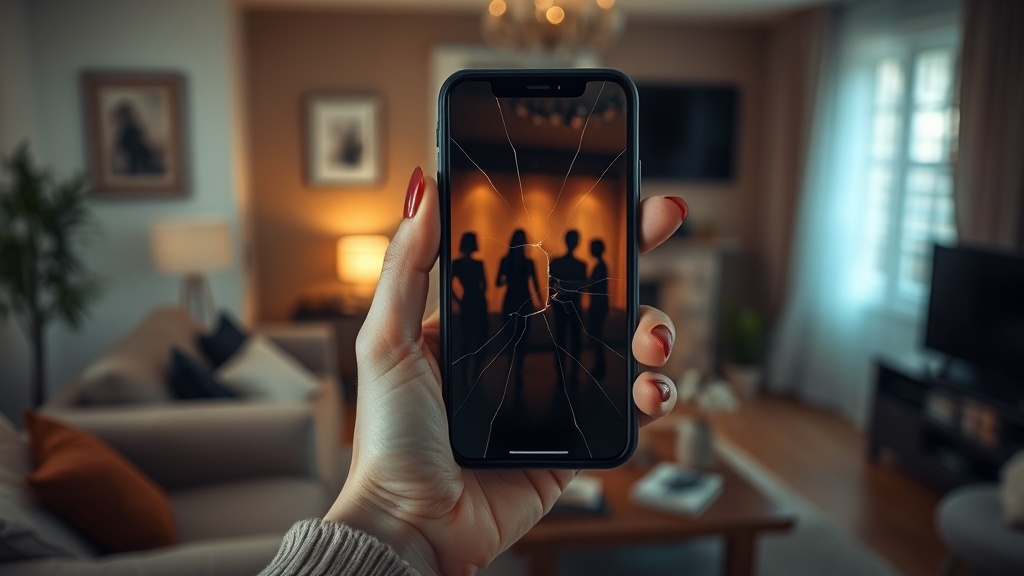
How I Unfollowed 47 Accounts and Finally Stopped Hating My Body After Scrolling
I did a thing last month that changed my daily experience more than any affirmation or journal prompt ever has.
I unfollowed 47 accounts in one sitting.
Not because they were posting anything overtly harmful. No one was selling detox teas or posting before-and-afters. Most of them were accounts I genuinely liked — fitness creators, food bloggers, lifestyle influencers. But when I paid attention to how I felt after scrolling past their content, the answer was almost always the same: worse. A little smaller inside. A little more aware of my stomach, my arms, the way my thighs looked in whatever I was wearing.
If you've ever closed Instagram feeling like you need to "get back on track" with something — eating, exercise, your body in general — you know exactly what I'm talking about.
Here's what I've learned, both as a former therapist and as someone who has done this work on herself: your feed is not neutral. It's a daily input stream that shapes how you see your body, and most of us have never actually audited it.
The comparison machine you carry in your pocket
There's solid research on this, and it says what you probably already feel. A 2023 meta-analysis published in Body Image found that appearance-focused social media use is consistently linked to higher body dissatisfaction, across genders and body sizes. It's not just "thin" content that does this — even body-positive content can trigger comparison if it centers a particular kind of body (usually smaller-fat, hourglass, conventionally attractive in every way except size).
When I was seeing clients, I started asking about social media habits around 2019, and it was one of the most revealing questions I could ask. People who were doing genuine work in therapy — challenging beliefs, building self-compassion — would come in on Mondays having undone half of it over a weekend scroll session. The outside input was louder than the inside work.
Your feed is an environment. And just like you'd rearrange your physical space to support recovery or growth, you can rearrange your digital one.
The unfollow audit: how to actually do it
This isn't about being "negative" or "too sensitive." It's about being honest with yourself about what content does to your nervous system. Here's how I approach it:
Step 1: Notice your body while you scroll. Not metaphorically — literally. Spend 15 minutes on your main feed and pay attention to your shoulders, your jaw, your stomach. When you hit a post that makes something tighten or sink, screenshot it. You're not judging the creator. You're collecting data about yourself.
Step 2: Sort your screenshots into categories. When I did this, mine fell into three buckets: "aspirational fitness" (bodies doing things mine doesn't do), "stealth diet culture" (anti-diet language but still centering thinness or weight loss), and "comparison-bait beauty" (people who just look the way I sometimes wish I looked). Yours might be different. The categories don't matter. The pattern does.
Step 3: Unfollow without guilt. You don't owe anyone your attention. You don't need to explain. You're not being mean. You're choosing what you marinate in every day, and that's one of the most powerful decisions you can make for your body image.
Step 4: Fill the gaps intentionally. This is the part people skip, and it matters. An empty feed just means the algorithm fills it for you, and the algorithm does not have your best interests at heart.
What I actually follow now (and why)
I'm not going to give you a "Top 10 Body-Positive Accounts" list, because those lists are everywhere and they tend to center the same handful of creators. Instead, I want to tell you what categories of content I've found genuinely helpful — the stuff that doesn't just make me feel temporarily validated but actually shifts something deeper.
Fat people just living. Not posing, not making content "about" their bodies, just existing. Cooking dinner. Traveling. Working. Wearing whatever. This is the content that rewires your brain, because it normalizes what diet culture has pathologized. When you see fat people living full, unbothered lives — not "despite" their size but without their size being the point — it recalibrates what you think is possible for yourself.
Disabled and chronically ill creators. This one surprised me, honestly. Following people who navigate bodies that work differently expanded my understanding of what "body acceptance" even means. It's not just about size. It's about the fundamental relationship between you and the body you live in. These creators taught me more about body neutrality than any wellness influencer ever has.
Older people doing things. We don't talk enough about how ageism and fatphobia are tangled together. Following people over 60 who are hiking, swimming, dancing, creating — it pushes back against the idea that bodies have an expiration date, which is really the same idea that says bodies have a "right" size.
Anti-diet dietitians and HAES practitioners. Not influencers — actual practitioners. People working in Health at Every Size frameworks who talk about the research, the evidence, the physiology. When someone with clinical training explains why intentional weight loss fails the vast majority of the time, it hits differently than when I say it. I need that reinforcement, and I'm not too proud to admit it.
Funny fat people. I need to laugh about this stuff sometimes. Not self-deprecating humor that uses our bodies as the punchline, but sharp, observational comedy about the absurdity of diet culture. The kind of humor that comes from people who have clearly done their own work and can now see the ridiculousness of a culture that sells you a problem and then sells you the solution.
Content that looks body-positive but isn't
This is the sneaky stuff that took me years to identify, and it's worth flagging because it's everywhere right now.
"Love your body" content that only shows certain bodies. If every body-positive post on an account features someone who's a size 12 with an hourglass shape, clear skin, and great hair — that's not body positivity. That's slightly expanding the beauty standard while keeping the structure intact. Real body positivity includes bodies that make you uncomfortable, because discomfort is where the growth happens.
"Anti-diet" accounts that are still about food rules. "I'm not on a diet, I just eat intuitively — and here's my beautiful, perfectly balanced plate that happens to be 400 calories." If intuitive eating content makes you feel like you're doing it wrong, you're probably following someone who rebranded their restriction.
"Self-love" as an aesthetic. Bubble baths and positive quotes over sunset photos. I don't have a problem with bubble baths — I have a problem with the implication that body acceptance is a vibe you can achieve with the right candle. This work is hard. It's messy. It involves crying in dressing rooms and choosing to go to the pool anyway and having a bad body image day and still feeding yourself. Content that makes it look effortless is lying to you.
The thing no one tells you about curating your feed
It feels weird at first. When you remove the comparison content, there's a period where you almost miss it — because your brain is used to that particular kind of stimulation. The tightening, the comparison, the subsequent motivation to "fix" yourself. It's a cycle, and like any cycle, breaking it feels disorienting before it feels freeing.
Give it two weeks. That's what I tell everyone. Two weeks of an intentionally curated feed, and then notice how you feel about your body. Not what you think about it — how you feel in it. The difference, for me, was significant enough that I now consider my annual feed audit as important as any other self-care practice I have.
More important than most of them, honestly. Because the mirror only shows me my body once or twice a day. My phone shows me everyone else's body a hundred times.
Your feed is a choice. Make it one that lets you breathe.