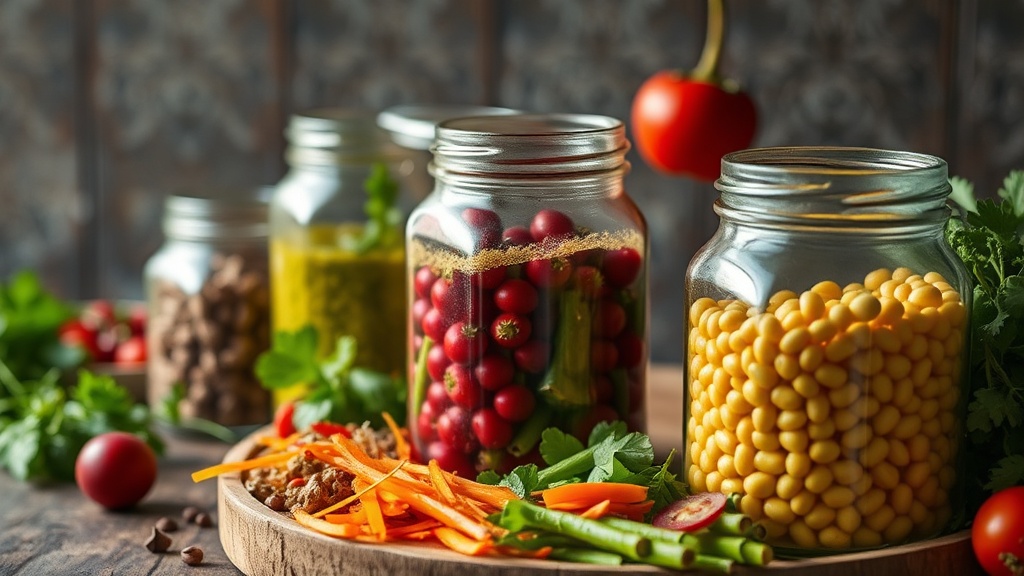
Nurturing Your Microbiome with Fermented Foods

Have you ever wondered why your digestion feels heavy or why your mood seems to dip right alongside your energy levels? This post explores the connection between your gut microbiome and fermented foods, explaining how these living microbes influence your overall well-being. We’ll look at what fermentation actually does to food, which specific foods to look for, and how to introduce them to your diet without causing digestive distress.
What are fermented foods and how do they work?
Fermented foods are products made through the controlled growth of microorganisms like bacteria and yeast under anaerobic conditions. These tiny organisms break down sugars and starches, producing organic acids or alcohol in the process. This biological process doesn't just preserve the food; it actually changes the chemical structure of what you're eating.
Think of it as a slow-motion transformation. When bacteria like Lactobacillus consume the sugars in vegetables, they create lactic acid. This acid acts as a natural preservative and gives these foods that distinctively tangy flavor we recognize in a jar of Kimchi or a bowl of Greek yogurt. It’s a form of predigestion. Because the microbes have already done some of the heavy lifting, your body often finds these nutrients easier to absorb.
The result of this process is a higher concentration of bioavailable nutrients and a diverse range of probiotics. These are the "good" bacteria that live in your gut. While we often focus on what we lack, sometimes the focus should be on what we're adding to support the existing ecosystem within us. It’s about supporting the biological reality of your body rather than fighting against it.
The process of fermentation has been used for thousands of years across almost every culture on Earth. It isn't a modern wellness fad; it's an ancient survival mechanism that has become a cornerstone of global nutrition.
Which fermented foods are best for gut health?
The best fermented foods for gut health are those that contain live, active cultures and haven't been pasteurized after the fermentation process is complete. Pasteurization kills the very bacteria you're trying to consume. If you buy a jar of sauerkraut from a shelf-stable aisle in a standard grocery store, it likely won't have those live microbes because the heat killed them off.
Here is a breakdown of common fermented foods and what makes them unique:
| Food Type | Examples | Primary Benefit |
|---|---|---|
| Vegetables | Sauerkraut, Kimchi, Pickles | High fiber and diverse bacterial strains |
| Dairy | Kefir, Greek Yogurt, Aged Cheeses | Calcium and easy-to-digest proteins |
| Soy-Based | Miso, Tempeh, Natto | Rich in enzymes and plant-based protein |
| Liquid/Beverages | Kombucha, Water Kefir | Refreshing, probiotic-rich hydration |
If you want to experiment, start with something simple. A spoonful of Wildbrine raw sauerkraut with lunch or a glass of GT's Kombucha is a great way to dip your toes in. You don't need to overhaul your entire pantry overnight. Small, consistent additions are often more effective than massive, sudden changes.
One thing to watch out for is the salt content. Fermented vegetables often require salt to facilitate the fermentation process. If you're watching your sodium intake, just be mindful of portion sizes. It’s a balance, not a strict rule.
How much fermented food should I eat daily?
Most nutritionists suggest starting with very small amounts—perhaps one to two tablespoons a day—and gradually increasing as your body adjusts. There isn't a single "perfect" number that applies to everyone because your individual gut sensitivity varies wildly. Some people can eat a bowl of kimchi without a second thought, while others might feel a bit bloated if they eat too much too fast.
If you find that your stomach feels a bit "noisy" or bubbly after eating fermented foods, that’s often a sign that your system is adjusting. It doesn't necessarily mean something is wrong. It's just your internal ecosystem responding to new guests. If the discomfort persists, you might want to scale back and try again in a week. (I've seen many people overdo it too quickly in an attempt to be "healthy," which usually backfires.)
A good rule of thumb is to vary your sources. Don't just rely on one type of probiotic. One day you might have yogurt, the next day a bit of miso in a soup. This variety ensures you're introducing different strains of bacteria to your gut, which supports a more diverse microbiome. Diversity is the name of the game here.
If you're currently struggling with a sensitive nervous system or digestive discomfort, you might find that certain fermented foods are more soothing than others. For example, a warm bowl of miso soup can be much gentler than a cold, fizzy kombucha. If you're looking for ways to soothe your system through other means, you might find using oat straw for a calmer nervous system to be a helpful companion to your nutritional shifts.
Common Mistakes to Avoid
- Buying "Vinegar-Based" Pickles: Many commercial pickles are made with vinegar and heat, not true fermentation. These won't provide the probiotic benefits of a truly fermented product.
- Ignoring the Label: Look for words like "raw," "unpasteurized," or "contains live cultures." If the label says "pasteurized after fermentation," the benefits are gone.
- Overdoing it too fast: Rapidly increasing your intake can lead to gas and bloating. Go slow.
- Relying on Sugar: Many kombuchas and flavored yogurts are loaded with sugar. High sugar intake can actually feed the "bad" bacteria, working against your goals.
It’s worth noting that your relationship with food should never feel like a chore or a math equation. If you find the taste of fermented foods too intense or sour, don't force it. You can find many ways to support your gut that don't involve eating something that tastes like a science experiment. The goal is nourishment, not perfection.
Sometimes, the most effective way to care for your body is to simply listen to it. If a certain food makes you feel energized and light, keep it. If it makes you feel sluggish or uncomfortable, move on. Your body is the best expert on what it needs.
When we talk about gut health, we're really talking about the foundation of our physical-emotional connection. A healthy gut can influence your mood, your skin, and your ability to handle stress. It's a complex, living system that deserves a bit of patience and respect.