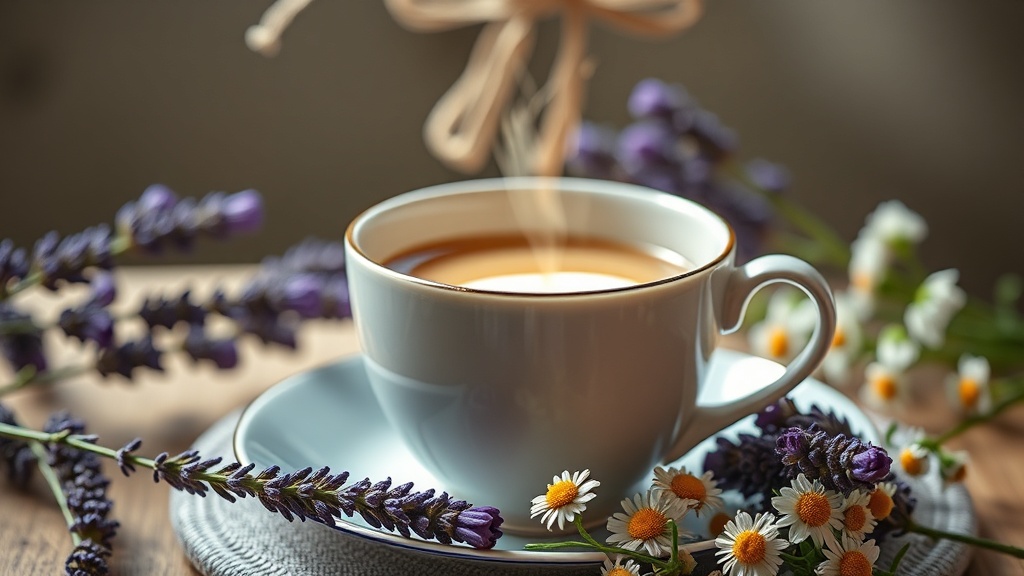
Brewing a Cup of Calm with Lavender and Chamomile

You will learn how to use lavender and chamomile to support your nervous system, the specific ways to prepare these herbs for maximum efficacy, and how to integrate these rituals into a realistic daily routine. This guide focuses on the practical application of botanical infusions to manage stress and promote rest.
Why use lavender and chamomile for relaxation?
Lavender and chamomile work by interacting with the neurotransmitters in your brain to promote a sense of calm and reduce physiological tension. While many people reach for a quick fix, these herbs offer a gent enough way to signal to your body that it is safe to slow down. It isn't about a "magical cure"—it's about gentle botanical support.
Chamomile contains apigenin, an antioxidant that binds to certain receptors in your brain that may decrease anxiety and initiate sleep. You might recognize this effect if you've ever felt a slight heaviness in your eyelids after a cup of tea. Lavender, on the other hand, is often used in aromatherapy to lower cortisol levels and heart rate. When you combine them, you're creating a dual-action ritual for your sensory system.
It's worth noting that these aren't just "scents." They are biological tools. If you've been feeling high-strung or unable to settle into your body, these herbs can act as a bridge between a frantic state and a restful one. If you've previously looked into using oat straw for a calmer nervous system, you'll find that these herbs work beautifully alongside those types of nervines.
The goal here is a gentle nudge toward homeostasis. You aren't trying to force a state of bliss; you're just providing the raw materials your body needs to find its own equilibrium.
How much lavender and chamomile should I use?
A standard ratio for a single cup of tea is one teaspoon of dried chamomile flowers and half a teaspoon of dried culinary-grade lavender. Using too much lavender can make the tea taste "soapy" or overly medicinal, which isn't exactly the vibe we're going for. Precision matters here, but don't stress if you're off by a tiny bit—the herbs are forgiving.
When buying your herbs, look for quality. You want dried flowers, not "tea dust" or broken bits that have lost their volatile oils. If the herbs look gray or dusty, they probably won't have much effect. You can find high-quality loose-leaf options from reputable sources like Mountain Rose Herbs to ensure you're getting the real deal.
| Herb Type | Typical Dosage (per 8oz water) | Primary Benefit |
|---|---|---|
| Dried Chamomile | 1-2 Teaspoons | Muscle relaxation & sleep support |
| Dried Lavender | 1/2 Teaspoon | Nervous system soothing & scent relief |
| Combination Blend | 1.5 Teaspoons total | Balanced, multi-sensory calm |
I often tell people to trust their nose. If the scent hits you and feels overwhelming, you've likely used too much lavender. The scent should be a gentle, floral hug, not a punch to the face.
How do I brew the perfect herbal infusion?
The most effective way to brew these herbs is through a long steep (infusion) rather than a quick, shallow steep (decoction). Most tea bags are designed for quick extraction, but for therapeutic botanical support, we want to pull out those much-needed oils and compounds.
- Boil your water: Start with fresh, filtered water. You want it just off the boil—around 200°F (93°C)—to avoid scorching the delicate flowers.
- Measure your herbs: Place your chamomile and lavender into a ceramic mug or a glass teapot.
- Pour and cover: This is the most important step. Pour the hot water over the herbs and immediately cover the cup with a lid or a small saucer. This prevents the essential oils (the stuff that actually helps you relax) from evaporating into the air.
- Steep time: Let the mixture sit for at least 7 to 10 minutes. For a stronger "medicine-style" tea, you can go up to 15 minutes.
- Strain and enjoy: Strain the herbs out and enjoy the warmth.
Sometimes, I like to add a tiny bit of honey. It doesn't just make it taste better; it can help coat the throat if the tea feels a bit "dry" from the lavender. But honestly, the way it is, it's quite lovely.
If you find yourself needing more robust support during the day, you might want to look into finding balance with holy basil. While chamomile is great for the evening, adaptogens like holy basil are wonderful for managing the daytime grind.
Is it safe to drink lavender and chamomile every day?
For most people, drinking a cup of lavender and chamomile tea daily is perfectly safe and a wonderful way to build a ritual. However, there are a few things to keep in mind regarding allergies and interactions. If you are allergic to the Asteraceae family (which includes ragweed or daisies), you should proceed with caution, as chamomile is part of this family.
It's also worth noting that lavender can have a mild sedative effect. If you're planning on driving or operating heavy machinery, maybe don't drink a double-strength cup right before. It's a subtle effect, but it's real.
A quick word on pregnancy and medication: If you are pregnant, nursing, or taking sedative medications (like benzodiazepines), please consult your healthcare provider before adding herbal infusions to your routine. Even "natural" things can interact with pharmaceutical paths. It isn't about being afraid; it's about being informed.
The beauty of this ritual is that it's entirely within your control. You can choose to have it every night, or just when the world feels a little too loud. There is no "right" way to do this, as long as you're listening to your own body's signals.
Sometimes, the simplest things are the most profound. A warm cup of tea isn't going to solve every problem in your life, but it provides a momentary pause. And in a world that demands constant movement, a pause is a radical act of self-care.
Steps
- 1
Gather your dried organic chamomile and lavender flowers.
- 2
Heat fresh water to just below boiling point.
- 3
Steep the herbs in a teapot for 5 to 7 minutes.
- 4
Strain the tea and sip slowly while practicing deep breathing.