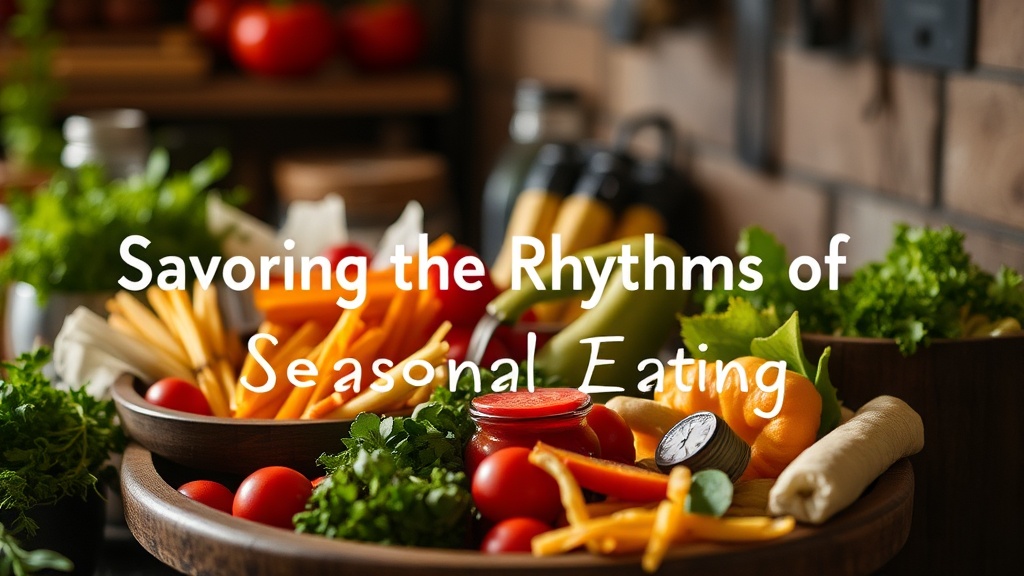
Savoring the Rhythms of Seasonal Eating

Quick Tip
Eat what is growing locally and seasonally to better support your body's natural cycles.
Do you ever feel like your diet is stuck in a perpetual state of summer, even when the frost is hitting the windows? This post explores how shifting your focus toward seasonal eating can help align your physical needs with the natural cycles of the earth. Instead of fighting against the changing weather, we'll look at how to work with it.
Why should I eat seasonally?
Eating seasonally aligns your nutritional intake with the natural availability of nutrients and the changing climate. When we eat what grows nearby, we often consume food that is more nutrient-dense and flavorful because it hasn't spent weeks in a shipping container. It's a way to reconnect with the actual rhythm of your environment.
For example, during the colder months, our bodies often crave warming, hearty foods like root vegetables and stews. This isn't just a preference—it's a biological response to the temperature drop. You might find that a warm bowl of lentils or a hearty squash soup feels much more grounding than a cold salad in January.
How do I start seasonal eating?
Start by visiting your local farmer's market or checking a seasonal produce guide to see what is currently in harvest. You don't need to overhaul your entire pantry overnight; just try one new seasonal ingredient each week.
Here is a quick breakdown of what to look for during different phases of the year:
| Season | Focus Foods | Desired Effect |
|---|---|---|
| Spring | Asparagus, Peas, Radishes | Light & Refreshing |
| Summer | Berries, Stone Fruit, Zucchini | Hydrating & Cool |
| Autumn | Apples, Pumpkin, Sweet Potato | Grounding & Warm |
| Winter | Root Veggies, Citrus, Braised Greens | Sustaining & Comforting |
Worth noting: seasonal eating also supports a healthier planet by reducing the carbon footprint associated with long-distance food transport. It's a small way to practice environmental stewardship through your daily habits.
A Note on Gut Health
As the seasons shift, your digestion might too. During the transition into colder months, many people find that incorporating fermented foods helps support their gut microbiome. If you're looking to support your digestion as the weather turns, you might enjoy nurturing your microbiome with fermented foods.
The goal isn't perfection—it's connection. Whether you're eating a crisp summer watermelon or a steaming bowl of winter stew, listen to what your body is asking for. It's a much more intuitive way to live.